
The Power Station Sessions
How a Legendary Studio Became the Quiet Constant in John Finbury’s Collaborative Journey
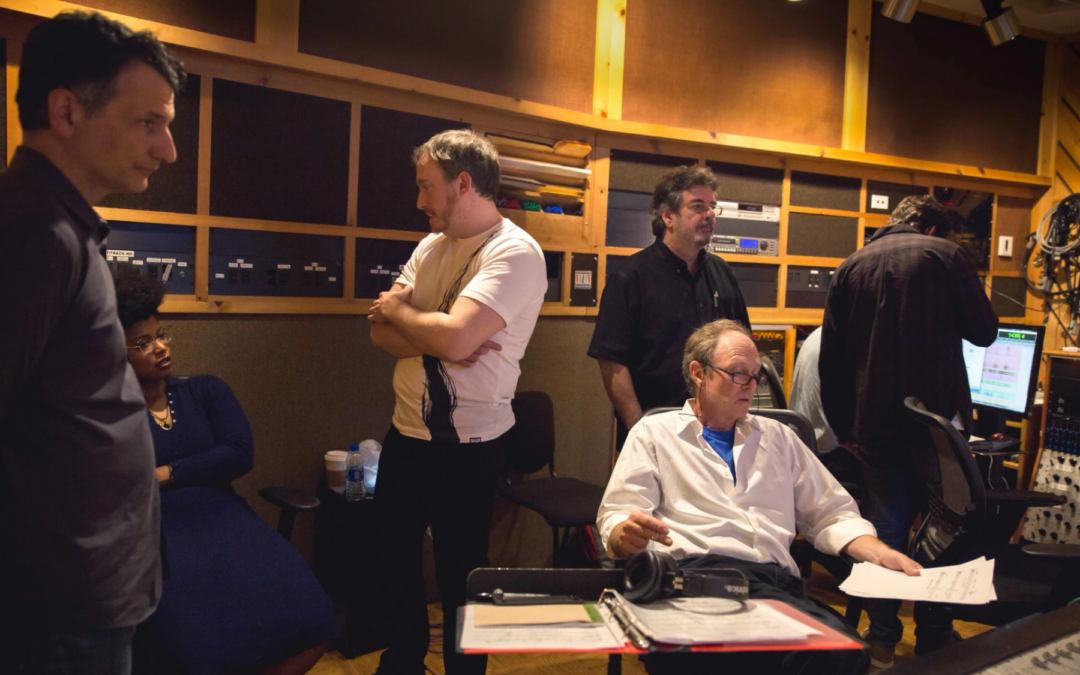
When listeners encounter a John Finbury composition, the first impression is often emotional: lush textures, lyrical melodies, and a distinct sense of presence. Behind many of those moments—especially in recent years—stands a recording space that shapes more than just the sound. This is the Power Station at BerkleeNYC, a revered studio that has quietly become a recurring creative home for John and his collaborators.
From Sorte! to Quatro, Ring The Bells, and the 2024 album Vã Revelação, the Power Station has hosted some of the most important sessions in Finbury’s evolving catalog. But more than a location, it’s a space of musical gathering—a place where players, composers, and producers bring ideas into form.
A Legendary Studio with a Living Legacy
Originally opened in 1977 by producer Tony Bongiovi, the Power Station earned early renown for its live rooms and acoustics that served artists like Bruce Springsteen, Paul Simon, and Herbie Hancock. In 2017, Berklee College of Music partnered with The City of New York to revitalize the space, transforming it into a state-of-the-art facility for both professional and educational use.
That intersection of legacy and innovation has made the Power Station an ideal match for John Finbury’s approach: rooted in tradition, open to experimentation, and always grounded in musical connection.
The Making of Sorte!: A First Encounter
In 2019, Finbury collaborated with Afro-Brazilian vocalist and composer Thalma de Freitas to record Sorte!, a collection of original Brazilian jazz songs. The sessions were produced by Emilio D. Miler and recorded at the Power Station, where Miler brought together a band of Brazilian and American jazz luminaries: Airto Moreira, Chico Pinheiro, John Patitucci, Duduka de Fonseca, Rogerio Boccato, and Vitor Gonçalves.
The live room at Power Station allowed the ensemble to record with spatial awareness—each player hearing and responding to the room’s unique acoustics. The result was not just technically pristine but emotionally vivid. Sorte! would go on to receive a Grammy nomination for Best Latin Jazz Album.
Return Sessions: Quatro and Remote Collaboration
Two years later, Finbury and Miler returned to Power Station to record Quatro, featuring Magos Herrera, Chano Domínguez, Patitucci, and Antonio Sánchez. These sessions were notable not only for the music, but for the way they were navigated amidst global travel limitations and pandemic protocols.
Power Station’s versatility as a recording environment allowed for staggered session scheduling, isolation when needed, and enough room for artists to connect—even at a distance. The album alternates between instrumental and vocal tracks, with a sonic clarity that underscores each performer’s role in the composition.
From the precise articulation of Domínguez’s piano to Herrera’s intimate vocal phrasing, the recordings feel simultaneously live and sculpted—a balance enabled in part by the Power Station’s careful room design and sound engineering.
The Voice of Loss: “Ring The Bells”
Not all Power Station sessions were planned. In 2021, after the sudden death of jazz legend Chick Corea, John Finbury wrote a quiet piano motif in Massachusetts and sent a phone recording to his friend Thalma de Freitas in Los Angeles. She responded the next morning with improvised lyrics and melody, turning grief into music.
This raw exchange became the foundation for “Ring The Bells,” recorded—once again—at Power Station. Producer Emilio D. Miler reconstructed the song with both musicians working remotely. Thalma’s voice, layered delicately over Finbury’s solemn piano, gained dimension through Power Station’s engineering and mixing. The final version is a testament to the studio’s ability to carry emotional intimacy across space and time.
A New Chapter: Vã Revelação and Bruna Black
In 2023, John Finbury returned to Power Station to record an album of original Brazilian jazz songs with rising São Paulo vocalist Bruna Black. The album, Vã Revelação, released in May 2024, features a cast of returning collaborators—Vitor Gonçalves, Chico Pinheiro, Duduka de Fonseca, Rogerio Boccato, and John Patitucci—who brought energy, depth, and precision to the project.
Bruna Black’s dynamic vocal performance, moving fluidly between samba, forró, and bossa nova, was captured with clarity and warmth, allowing each inflection to breathe. The studio’s hybrid legacy—part analog soul, part digital polish—helped Vã Revelação find its vibrant tone: grounded in heritage, yet unmistakably current.
Why This Studio Matters to the Music
In a catalog as stylistically rich as John Finbury’s, the role of the recording environment cannot be overlooked. The Power Station has provided not just a technical foundation, but a creative atmosphere where musicians can explore without losing cohesion.
It’s also where trust is built—between the composer and performers, between producers and engineers, between old collaborators and new voices. The consistency of sound across Sorte!, Quatro, Ring The Bells, and Vã Revelação is due not only to John’s compositional voice, but to the way the Power Station has supported that voice.
Final Thoughts: A Studio as Ensemble Member
Some studios become part of the ensemble. The Power Station’s place in John Finbury’s recent output is more than logistical—it’s musical. The acoustics, engineering, and collaborative layout have shaped the recordings not just technically, but spiritually.
In a world of remote tracking and digital isolation, Power Station remains a place where musical conversation happens in real time. For a composer whose work is defined by shared expression and cross-cultural connection, that kind of space is not just valuable—it’s vital.
Listen
Many of John Finbury’s recent recordings were made at the Power Station at BerkleeNYC. To explore these sessions, listen to albums like Sorte!, Quatro, and Vã Revelação on all major platforms. For more on John’s work and collaborations, visit Green Flash Music.