
The Sound of Looking Back
John Finbury’s music often moves forward — blending jazz, Brazilian rhythms, and chamber arrangements. But some of his most resonant songs linger in the past. Two recent collaborations, “That Was Then” and “Boulevard,” explore themes of memory and distance — not nostalgically, but reflectively.
These songs don’t chase a bygone time. They hold it gently — examining what’s left, what’s changed, and what still echoes.
“That Was Then”: Elegance in Acceptance
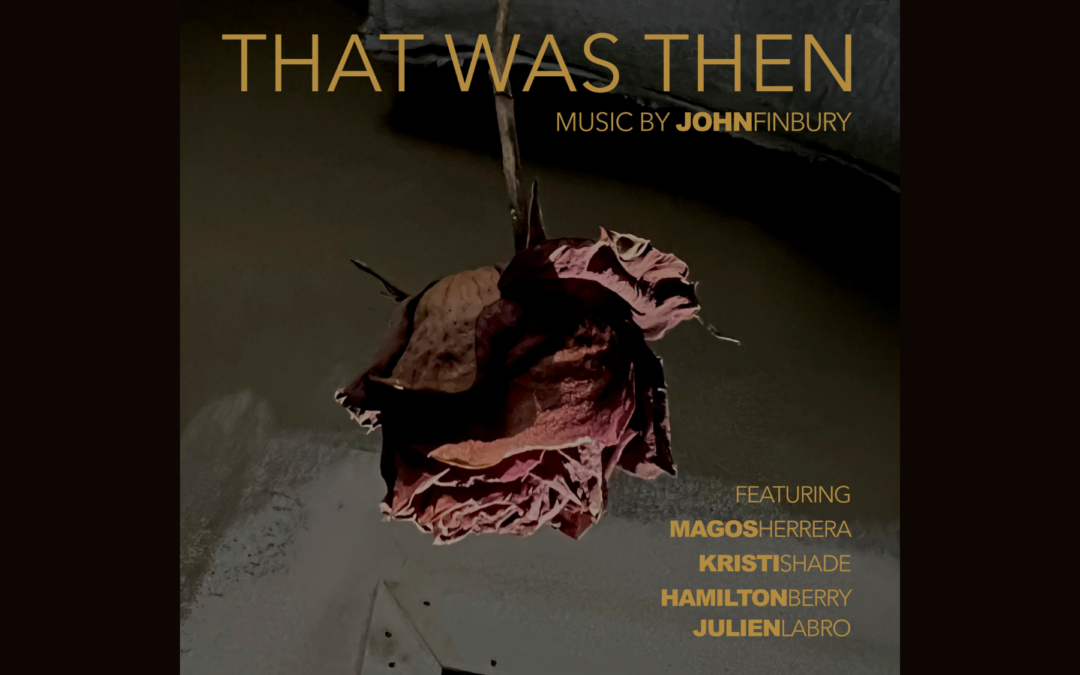
“That Was Then,” composed by John Finbury with lyrics and vocals by Magos Herrera, is a study in restraint. Released in 2022, the song evokes the end of a relationship not with heartbreak, but with quiet understanding.
Herrera’s lyric is elliptical — suggesting rather than stating. The phrase “that was then” implies distance, but not regret. The arrangement, produced by Emilio D. Miler, features harp (Kristi Shade), cello (Hamilton Berry), and bandoneón (Julien Labro), forming a delicate trio that mirrors the emotional subtlety of the vocal.
The song’s pacing invites reflection. There are no dramatic turns, only melodic phrases that rise and fall like memory surfacing.
“Boulevard”: Melancholy in Motion
“Boulevard,” composed by Finbury with original French lyrics by Camille Bertault, takes a different path through similar territory. Where “That Was Then” is still, “Boulevard” moves — its rhythmic pulse shaped by organist Larry Goldings and drummer Billy Martin.
Bertault’s lyrics evoke a walk down a city street — real or imagined. The images are fleeting, like storefronts or shadows, and the tone shifts between playful and wistful. It’s not clear if the “you” of the song is present or remembered, and that ambiguity gives the song its poignancy.
Finbury’s composition gives Bertault room to shape the narrative. Her phrasing stretches across bars, syncopates, pauses. It’s jazz storytelling shaped by memory, but not bound to it.
Memory Without Sentimentality
Both songs treat memory with a light touch. There’s no indulgence, no dramatic declarations. Instead, Finbury and his collaborators offer nuance — emotional shading rather than emotional display.
In “That Was Then,” the past is accepted. In “Boulevard,” it’s questioned. But in both, memory isn’t something to relive. It’s something to understand.
Production That Reflects Mood
Producer Emilio D. Miler, who worked on both songs, matches each track’s emotional tone with sparse, transparent production. In “That Was Then,” the harp, cello, and bandoneón never overpower the vocal. In “Boulevard,” the groove is loose but never rushed — like a stroll through thought.
These aren’t arrangements designed to impress. They are designed to reveal. Every note feels necessary, nothing ornamental.
The Role of Language
Language plays a key role in both songs. “That Was Then” is in English, but lyrical and abstract. “Boulevard” is in French, adding softness and fluidity to the phrasing. Each language contributes to the song’s texture, helping shape the emotional landscape.
Finbury’s music supports each language without strain. His melodies allow for phrasing flexibility, making the songs feel natural regardless of idiom.
Composing With Space
Finbury’s compositional strength in both songs lies in what he leaves out. The melodies are simple, but emotionally loaded. The harmonic movement is slow, allowing the lyric and voice to guide the listener.
It’s a form of minimalism not in style, but in function — clearing space for emotion to emerge without forcing it.
Collaborations That Listen
Herrera and Bertault are both artists who interpret with intelligence and emotional control. Their vocals never overstate. Instead, they invite the listener into a shared space — one where memory is not explained, but felt.
This reflects Finbury’s broader collaborative ethos. He writes for the voice, not just the vocalist — trusting each artist to shape the song’s meaning through tone, timing, and breath.
Continuing the Thread
These two songs are not isolated departures. They continue a thread in Finbury’s work — compositions that explore the inner world, using melody and space to reflect on what once was.
They sit alongside earlier works like “Final Days of July” and “All The Way To The End” — songs that don’t shout, but stay.
Listen
To experience “That Was Then” and “Boulevard,” visit all major streaming platforms or Green Flash Music. For more on the collaborations with Magos Herrera and Camille Bertault, explore Finbury’s full discography.