
A Musical Conversation That Continues
John Finbury’s Brazilian compositions don’t imitate — they participate. From his first album of Brazilian jazz originals in 2015 to his most recent work with Bruna Black, Finbury has approached Brazilian music not as an outsider borrowing style, but as a composer in dialogue with its traditions.
That dialogue began with “A Chama Verde” and continues today with “Será.” Along the way, it has involved native Brazilian singers, world-class instrumentalists, and lyricists who shape the soul of each song.
“A Chama Verde”: Where It Started
“A Chama Verde” was one of the standout tracks on Imaginário, Finbury’s 2015 album featuring vocalist Marcella Camargo. With lyrics by Ned Claflin and music by Finbury, the song captured the feel of classic Brazilian ballads — lyrical, harmonically rich, and emotionally understated.
Its nomination for Latin Grammy Song of the Year in 2016 was not a breakthrough so much as a recognition: this was Brazilian music, written with care and cultural respect.
Pitanga: A Broader Palette
In 2017, Finbury expanded his Brazilian palette with Pitanga, once again featuring Marcella Camargo on vocals. The album drew from a wider range of Brazilian styles — samba-reggae, bossa nova, partido alto — all interpreted through Finbury’s compositional lens.
The lyric team of Ned Claflin and Patty Brayden contributed to the album, shaping texts that balanced emotional openness with rhythmic flow. Finbury’s melodies remained singable and expressive, rooted in melodic tradition rather than harmonic complexity for its own sake.
Sorte!: Enter Thalma de Freitas
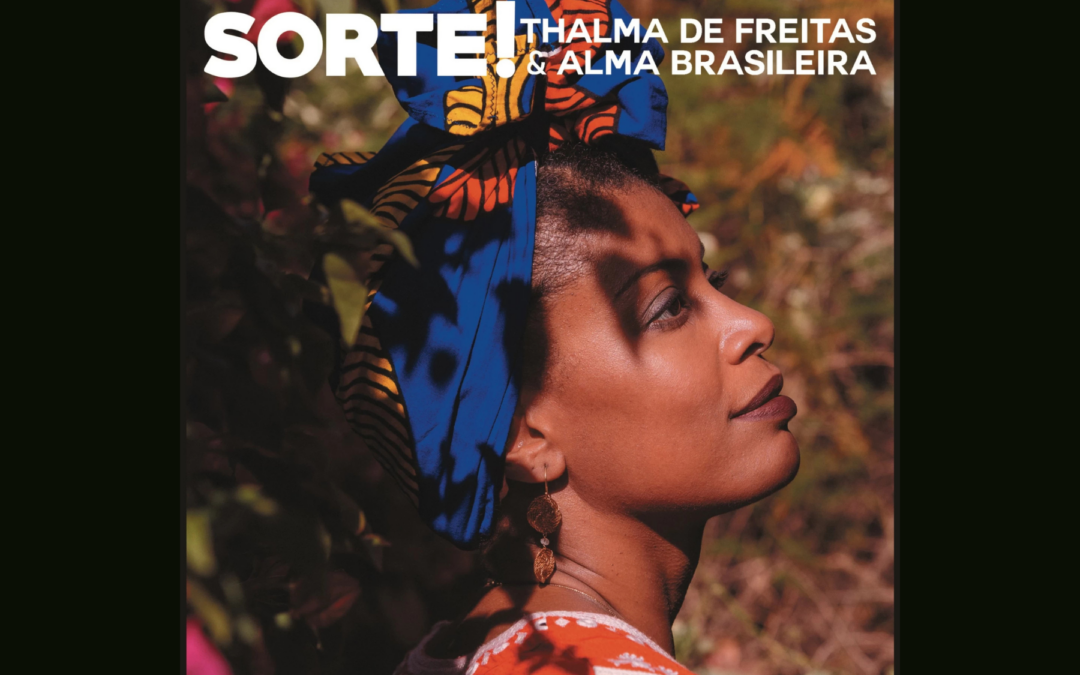
With the 2019 album Sorte!, Finbury began a new collaboration with Afro-Brazilian singer-songwriter Thalma de Freitas. Unlike previous albums, where lyrics were written in English or translated into Portuguese, this project was entirely conceived in Brazilian Portuguese by a native artist.
Produced by Emilio D. Miler and recorded at Power Station NYC, Sorte! features an all-star band: Airto Moreira, Chico Pinheiro, John Patitucci, Duduka de Fonseca, Rogerio Boccato, and Vitor Gonçalves. The result is a six-song collection that blends Brazilian jazz authenticity with Finbury’s melodic sensibility.
Vã Revelação: The Bruna Black Era
Released in 2024, Vã Revelação introduces a new voice in Finbury’s Brazilian songbook: Bruna Black. A singer, composer, and actress from São Paulo, Bruna brings a dynamic energy to the music — blending samba, forró, baião, and afoxê with poetic vocals and rhythmic nuance.
The album was produced once again by Emilio D. Miler and recorded at Power Station NYC with returning musicians from the Sorte! sessions. The synergy is clear — these are musicians who understand the pulse of Brazilian music and Finbury’s role within it.
“Será”: A Moment of Reflection
The single “Será,” co-written with Bruna Black and Miler, exemplifies the next step in Finbury’s Brazilian evolution. The song asks, “Could it be…?” — a quiet philosophical question rendered through airy vocal phrasing and harmonic openness.
The melody is understated, but persistent — looping gently like a thought that won’t quite resolve. Bruna’s delivery balances vulnerability and control, offering an interpretation that feels both personal and culturally specific.
What Has Evolved?
Across these projects, what’s evolved isn’t the genre — it’s the depth of collaboration. Early works leaned on careful research, translation, and interpretation. Later works — especially with Thalma de Freitas and Bruna Black — are co-authored, grounded in shared musical trust.
Finbury’s writing has also become more spacious. Where early arrangements were tightly composed, newer recordings allow more space for the vocalist to lead — a sign of growing confidence in the interpretive power of his collaborators.
Consistency in Voice
Despite the evolution, certain traits remain constant. Finbury’s Brazilian compositions favor lyrical melodies, emotional subtlety, and rhythmic integrity. He doesn’t overwrite. His songs don’t try to prove fluency — they express feeling.
Each collaboration adds to a broader songbook — one that honors Brazilian musical forms while reflecting the voice of an American composer who listens deeply.
A Songbook, Not a Series
Taken together, songs like “A Chama Verde,” “Filha,” “That Was Then,” and “Será” form a kind of ongoing conversation — not just a catalog. They are connected not by release date or singer, but by intention: to create Brazilian music that lives, breathes, and connects.
It’s not a trilogy or a series. It’s a songbook — open-ended, multilingual, and always in progress.
Listen
To hear the evolution of John Finbury’s Brazilian voice, listen to Imaginário, Pitanga, Sorte!, and Vã Revelação, as well as singles like “Será.” For full credits and collaborations, visit Green Flash Music.