
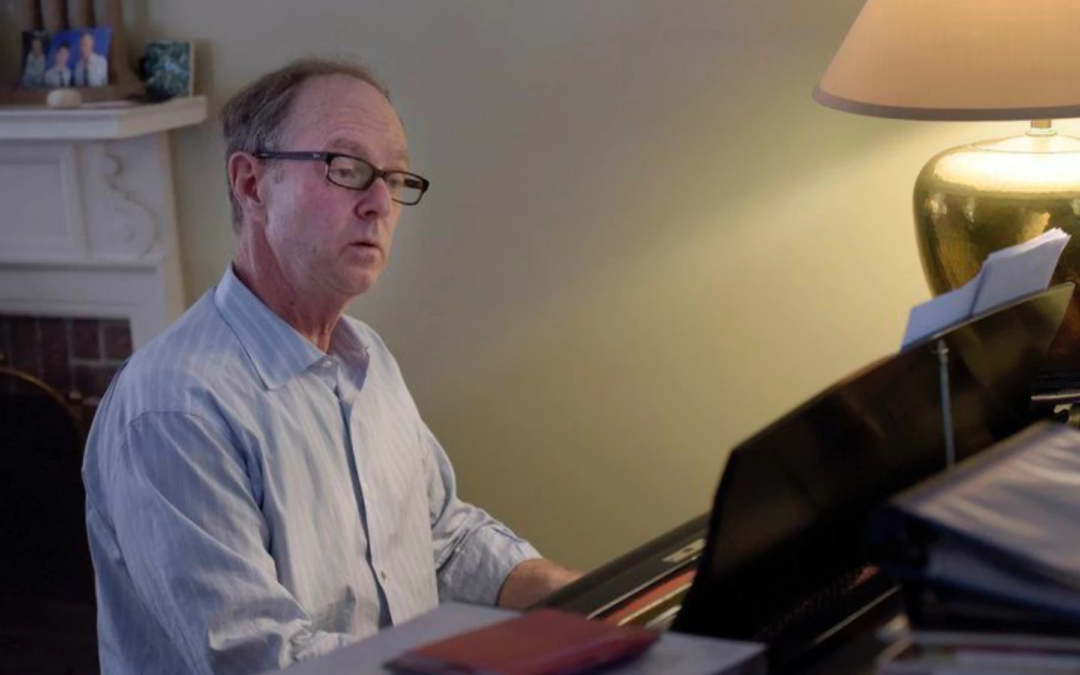
More Than an Instrument
For John Finbury, the piano is not just a musical tool. It’s a workspace, a sketchbook, and a place of emotional discovery. While his recordings feature world-class vocalists and instrumentalists, many of his compositions begin in the quiet of a room, alone at the piano.
It’s where melodies surface, harmonies evolve, and arrangements take form — not with volume, but with touch.
Early Study, Lifelong Connection
Finbury studied classical piano and music theory at the Longy School of Music and Boston University. That education provided a formal foundation, but his musical instincts stretch beyond classical discipline. His training is audible in the harmonic sophistication of his writing — yet he never writes from theory alone.
Instead, Finbury lets the piano reveal the mood. A voicing might lead to a lyric. A single motif can open a new direction. The keys become a dialogue partner, not just a tool.
Composing for Others From the Bench
Though he composes for other instrumentalists and singers, Finbury writes from the piano. He considers the range, texture, and pacing of a composition from the perspective of the keyboard — imagining how other voices will enter and interact.
In many of his Brazilian jazz works, the rhythmic pulse begins at the piano, later interpreted through percussion or guitar. In his chamber jazz compositions, melodic phrasing is developed with piano-cello counterpoint in mind. Even when he is not the featured performer, his piano defines the music’s architecture.
The Sound of Solitude: American Nocturnes
One of the clearest examples of Finbury’s piano-led process is American Nocturnes – Final Days of July. Composed for a small ensemble without drums, the album relies heavily on the piano to shape both rhythm and emotional pacing.
The pieces feel contemplative, sometimes unhurried — as if composed in real time at the keyboard. Rather than dictate timing, Finbury’s piano lines invite space. The improvisational sections of the album were built around this elasticity, allowing players to respond organically.
Improvisation as Sketch
Finbury often records ideas at the piano on his phone — moments of improvisation that later evolve into structured pieces. These sketches capture not just notes, but mood.
One example: the opening motif of “Ring The Bells” was first recorded as a phone memo — a repetitive, meditative phrase that carried emotional weight. That rough sketch, shaped at the piano in solitude, eventually became a finished song with Thalma de Freitas during the pandemic.
Composition Through Conversation
Writing from the piano allows Finbury to think dialogically — imagining how a vocalist might phrase a line, how a cellist might shade a note. His compositions are shaped not just by harmonic structure, but by imagined performance.
This approach is evident in his collaborations with lyricists. When working with Patty Brayden, Ned Claflin, or Magos Herrera, he often begins with a piano-driven sketch — letting the melodic arc suggest the lyric rhythm, tone, or mood.
Melody Comes First
Despite his harmonic fluency, Finbury’s writing centers on melody. The piano becomes a means of revealing the core tune — not complicating it. Whether he’s composing a samba or a waltz, the tune must sing on its own.
This melodic clarity is part of why his music adapts so well across voices and ensembles. From Bruna Black to Camille Bertault, each vocalist brings their own interpretation — but the song remains grounded in its original pianistic arc.
Studio to Stage: The Piano’s Ongoing Role
Even in the studio, Finbury remains involved at the piano. Though not always the featured performer, he often plays reference tracks, shares lead sheets, or provides arrangements built from piano notation.
This grounding keeps his work cohesive. The piano is the compositional spine — the point of origin from which the music grows outward, into rhythm sections, horns, voices, and strings.
Composing With (and Against) Silence
One reason Finbury’s music feels so emotionally articulate is his use of space — often shaped at the piano. Rather than fill every moment, he lets silences speak. The pauses, hesitations, and dynamic shifts reflect not just jazz sensibility, but piano-based phrasing.
This is particularly evident in slower pieces, where the sustain pedal becomes part of the narrative, and the decay of a chord carries the same emotional weight as a lyric line.
Listen
To experience John Finbury’s compositional voice at the piano, listen to American Nocturnes, “Ring The Bells,” and select moments from Quatro and Vã Revelação. For more on his process and recordings, visit Green Flash Music.