
When listening to the hauntingly lyrical piece “¡Por Ennio!”, the first reaction might be emotional—drawn in by the warm textures, cinematic phrasing, and the quiet gravity that seems to hover between each note. But as the music unfolds, another layer becomes apparent: this is not only a tribute to the legendary composer Ennio Morricone, it’s also a testament to the power of thoughtful arrangement.
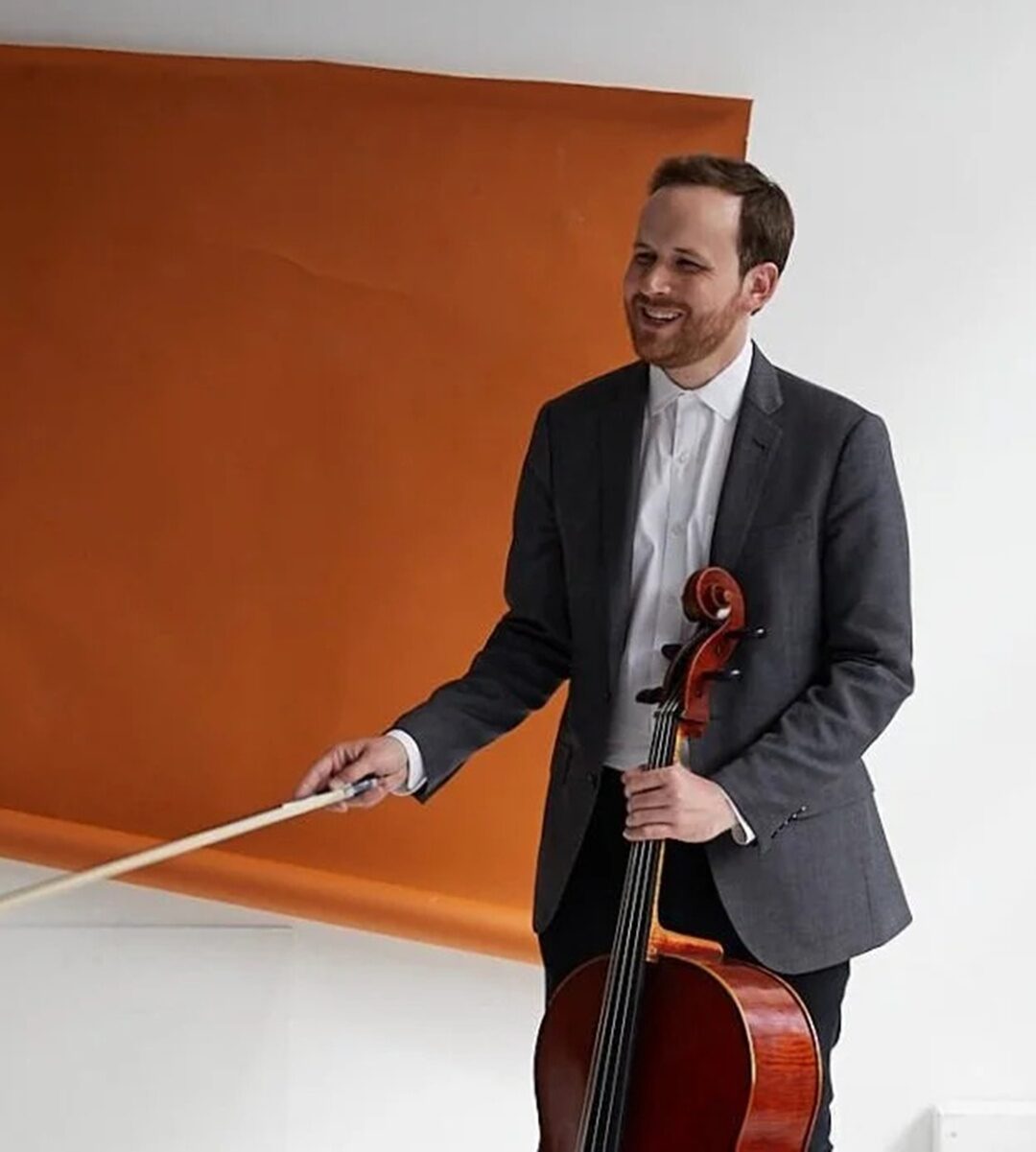
At the heart of that arrangement is Hamilton Berry—cellist, composer, and a vital voice within the boundary-pushing ensemble PUBLIQuartet.
In “¡Por Ennio!”—composed by John Finbury with lyrics and vocals by Magos Herrera—Berry doesn’t just play; he shapes the listening experience. His work as the arranger brings emotional logic and architectural integrity to a piece that bridges jazz, chamber music, and lyrical storytelling.
Who Is Hamilton Berry?
Hamilton Berry is a genre-defying cellist whose artistry spans classical, contemporary, and improvised music. A graduate of both Rice University and The Juilliard School, Berry brings technical excellence and stylistic fluidity to every project he touches.
As a core member of PUBLIQuartet, Berry has helped redefine what a string quartet can be. The group is known for its innovation—moving fluidly between written scores and improvisation, from works by contemporary composers to arrangements of jazz, folk, and pop.
Berry’s cello playing is expressive yet restrained, emotional yet clear-eyed. His tone often serves as a grounding voice—a center of gravity around which other textures orbit. But as an arranger, Berry’s talent takes on a more architectural role: translating musical ideas into emotional journeys.
And that is precisely what he accomplished in “¡Por Ennio!”
“¡Por Ennio!”: A Tribute Arranged with Poise and Precision
“¡Por Ennio!” is a composition by John Finbury, known for his Grammy and Latin Grammy-nominated works that blend jazz, Brazilian music, and chamber stylings. For this piece, Finbury teamed up with acclaimed vocalist and lyricist Magos Herrera, whose poetic contributions elevated the song into the realm of contemporary art song.
But to bring all of these elements together—a cinematic compositional palette, a lyrical vocal line, and a string ensemble capable of both precision and emotional breadth—required an arranger who understood both the technical and the emotional demands of the piece.
Enter Hamilton Berry.
Berry’s arrangement for PUBLIQuartet transforms “¡Por Ennio!” from a musical sketch into a fully realized emotional landscape. His choices—how to voice chords across the ensemble, how to support Herrera’s vocals without overpowering them, how to maintain narrative momentum through instrumental interplay—are subtle, sophisticated, and deeply musical.
Berry doesn’t just translate Finbury’s score for quartet; he interprets it, creating spaces for breath, movement, and resonance. The arrangement feels cinematic in its own right, paying homage to Morricone not through mimicry, but through emotional truth.
The Role of PUBLIQuartet
PUBLIQuartet—of which Hamilton Berry is a founding member—is no ordinary string quartet.
Comprised of Curtis Stewart (violin), Jannina Norpoth (violin), Nick Revel (viola), and Berry (cello), the ensemble has earned a reputation for reshaping the string quartet tradition. With projects that embrace improvisation, genre fusion, and social commentary, PUBLIQuartet performs with a boldness that invites listeners into new sonic worlds.
In “¡Por Ennio!”, PUBLIQuartet’s performance is both precise and spontaneous, a balance that reflects the ensemble’s unique ability to inhabit multiple musical languages at once. And Hamilton Berry’s arrangement is the framework that allows this duality to breathe.
The ensemble’s interpretation is not just an accompaniment to Herrera’s vocals; it is a character in its own right—reactive, reflective, sometimes leading, sometimes following.
A Cross-Genre Conversation
“¡Por Ennio!” is many things at once: a tribute to a cinematic master, a modern art song, a string quartet tone poem. But perhaps more than anything, it is a conversation—between composer, arranger, performer, and listener.
Hamilton Berry’s role as arranger is the connective tissue of that conversation. He ensures that the music holds together structurally while also communicating emotionally. His cello lines guide the piece’s tone: warm, grounded, and quietly expressive.
The collaboration with Magos Herrera—whose vocals are as much about tone and phrasing as they are about words—adds another layer of nuance. Herrera is an improviser and storyteller, and Berry’s arrangement respects that flexibility, leaving room for expressive detours while maintaining compositional integrity.
In this way, “¡Por Ennio!” is a shining example of collaborative artistry—the kind John Finbury has fostered throughout his career.
Why This Work Resonates
At a time when music is often compartmentalized—by genre, by platform, by algorithm—“¡Por Ennio!” and Berry’s arrangement offer a reminder of music’s essential fluidity. It’s a piece that doesn’t fit neatly into a category, and that’s what gives it power.
Berry’s arrangement doesn’t scream for attention. Instead, it listens, creates space, and invites the listener in. It demonstrates how arrangement, often an invisible art, can be the very thing that gives a piece its identity.
For those familiar with Berry’s work beyond PUBLIQuartet—including collaborations with artists like Decoda, Founders, and A Far Cry—this sensitivity is nothing new. But “¡Por Ennio!” may be one of the clearest examples yet of how Berry brings his full musical self to the table: as a performer, arranger, and collaborator.
Final Thoughts: The Arranger as Architect
In the world of music, the role of an arranger is often underappreciated—overshadowed by the composer’s vision or the soloist’s spotlight. But in works like “¡Por Ennio!”, we are reminded that arrangement is itself an art form, requiring not only technical fluency but emotional intelligence.
Hamilton Berry brings both to this project in abundance.
His work on “¡Por Ennio!” is a quiet triumph—an arrangement that not only supports but illuminates. It’s a testament to the deep listening, the mutual respect, and the shared artistry that lie at the heart of this remarkable collaboration between John Finbury, Magos Herrera, PUBLIQuartet, and of course, the spirit of Ennio Morricone.
Explore More
Listen to “¡Por Ennio!” on your favorite streaming platform and discover more about the music of John Finbury at GreenFlashMusic.com
Follow Hamilton Berry and PUBLIQuartet for more boundary-breaking collaborations that continue to shape the future of chamber music.